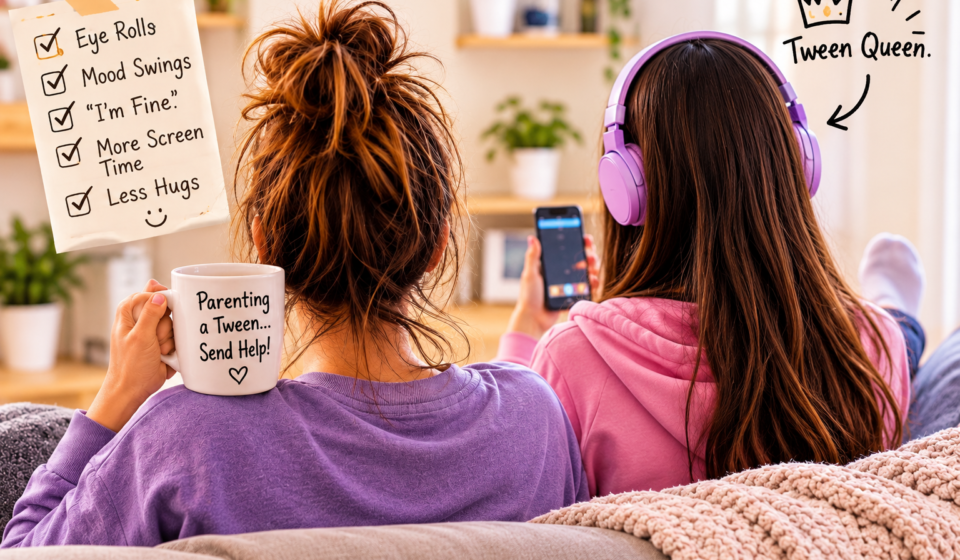

“I survived the toddler tantrums, only to discover that the tween years come with better vocabulary, strong opinions and dramatic facial expressions!”
If you thought parenting was challenging when your child was a toddler, wait until they become a tween. Remember those adorable little humans who thought you were their entire universe? The ones who followed you everywhere, wanted you to sit beside them, and believed you knew absolutely everything?
Well, congratulations! Those little humans have now upgraded their operating system. Unfortunately, the new version comes with eye rolls, dramatic sighs, selective hearing and an attitude that could give you a run for your money.
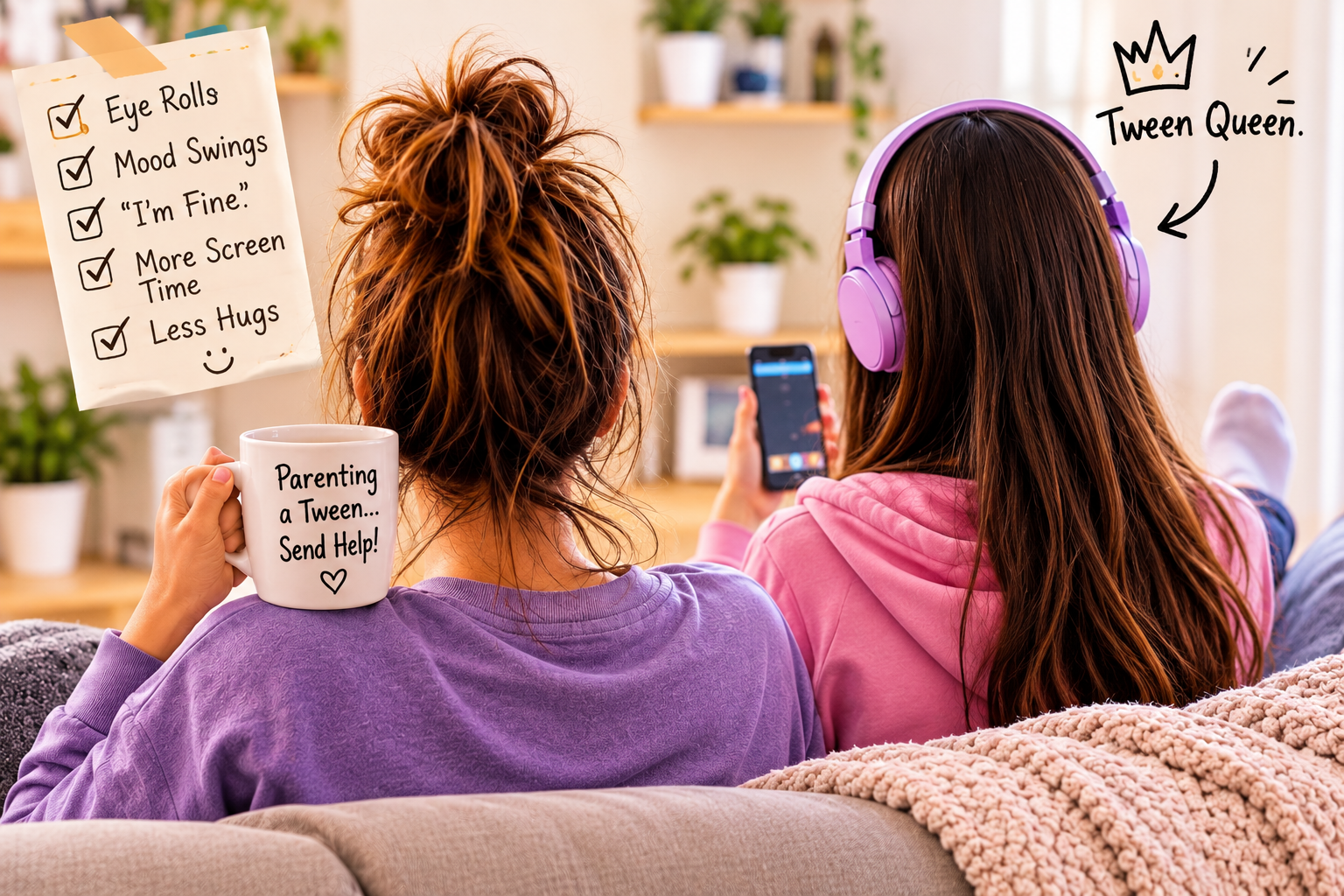
Welcome to the tween years!
One minute, your child is clinging to you for a hug, and the next, they don’t even want you sitting next to them. Apparently, personal space is now a thing! You haven’t changed. Your parenting hasn’t changed. But somehow, your existence has become a source of mild irritation.
But jokes apart, the tween years (children between 8-12 years) are an important phase of growing up. Children begin experiencing physical, emotional and social changes. They want independence, but still need guidance. They want to be treated like adults, but occasionally need help finding their own socks!
So, how do you navigate this interesting phase without turning every conversation into a debate?
Here are five things that might help:
1. Pick Your Battles (Not Every Eye Roll Deserves a War!)
The dramatic sighs, the eye rolls and the classic “Mum, you just don’t understand!” can test even the calmest parent’s patience. Tweens are developing their own opinions and learning to express their individuality. They may not agree with everything you say, and that’s perfectly normal.
What can you do?
Don’t turn every disagreement into an argument. Allow them to express their opinions, but make it clear that respect is non-negotiable. Save your serious discussions for things that genuinely matter. After all, you cannot win every battle. And honestly, who has the energy?
2. Listen More, Lecture Less
Remember when your child would tell you every little detail about their day? Now, conversations often go something like this:
“How was school?”
“Fine.”
“What happened today?”
“Nothing.”
Tweens are becoming more independent, and friendships, peer acceptance and personal interests start taking centre stage. Sometimes, they need someone to listen rather than someone to provide a ten-point solution.
What can you do?
Make time for casual conversations. Ask open-ended questions, listen without judging and resist the urge to turn every discussion into a lecture. Sometimes, a simple “I understand” works better than a 20-minute motivational speech.
3. Set Boundaries Without Becoming the Household Police
Screen time, gaming, YouTube, social media and online trends. Welcome to the digital battlefield! Inspite of having parental controls on screen, “five more minutes” can easily turn into fifty, and getting your tween away from a screen can feel like negotiating an international peace treaty.
What can you do?
Establish clear screen-time rules, keep devices away during meals and bedtime, and encourage offline activities. Most importantly, discuss online safety, privacy and responsible digital behaviour. And remember, children notice what we do. So perhaps put your own phone down before asking them to do the same. Yes, Mum, that includes you!
4. Give Them Independence (Within Reason!)
Suddenly, your fashion advice is outdated, your choice of clothes is questionable, and apparently, everyone else’s parents are much cooler. Tweens are beginning to explore their identity. They want to make choices, experiment with their appearance and feel more in control of their lives.
What can you do?
Allow age-appropriate choices. Let them select their clothes, organise their belongings and take responsibility for small decisions. Set sensible boundaries around safety, behaviour and spending. Give them room to make mistakes and learn from them.
5. Be Their Safe Space, Not Just Their Rule Book
Behind all the attitude, mood swings and declarations of independence is a child who is still figuring out the world. Some days they’ll behave like grown-ups; on other days, they’ll need reassurance over the smallest things. Their emotions can feel overwhelming, and they may not always know how to express them.
What can you do?
Be approachable. Spend quality time together, acknowledge their feelings, appreciate their efforts and let them know they can talk to you without fear of being judged. Because one day, when life gets complicated, you want to be the person they turn to, not the person they hesitate to approach.
Parenting a tween is a curious combination of unconditional love, unlimited patience, emotional negotiations and wondering whether you’ve accidentally raised a tiny, highly opinionated adult.
But that’s parenting!
Our children are growing, changing and discovering who they are. And while we’re busy trying to keep up with their evolving personalities, we’re learning too.
The toddler tantrums may have evolved into tween drama, but the need for love, reassurance, guidance and connection hasn’t disappeared.
So, here’s a virtual high-five to every parent navigating this wonderfully confusing phase. We’re surviving the eye rolls, negotiating screen time, respecting personal space and trying not to embarrass our children simply by existing.
And yes, I still believe we deserve medals! Actually, make that trophies. With our names engraved on them!
Until next time, keep parenting, keep laughing and remember, this phase will pass. Hopefully, before our patience does! 🙂
Discover more from PurpleChicS
Subscribe to get the latest posts sent to your email.